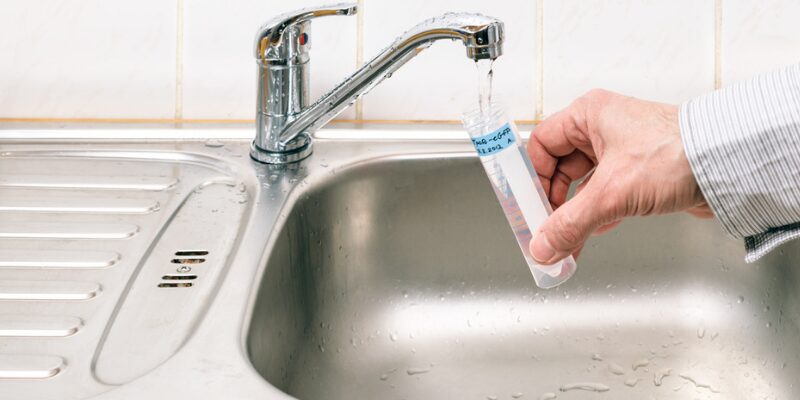
A water testing company Brooklyn helps institutional asset managers, real estate investment trusts, and private equity investors protect portfolio value by bringing water quality into the same standardized framework used for other major property metrics. When managing a diverse real estate portfolio, stakeholders focus intensely on consistency, operational efficiency, and risk reduction, tracking financial yields, roof ages, HVAC performance, and energy consumption across multiple assets. Water quality deserves the same level of attention, because hidden contamination or plumbing-related issues can affect tenant safety, compliance, and long-term building performance. By collecting samples, running certified laboratory analysis, and delivering clear, comparable reports, a water testing company Brooklyn gives investors the data they need to make informed decisions and maintain stronger, more resilient properties.
Yet, one of the most critical structural components—the property’s water chemistry and internal plumbing health—is frequently left entirely out of the tracking matrix. For many portfolio operators, water testing is treated as an isolated, reactionary task. A test is conducted only when a single building experiences a brown water crisis, or when an annual regulatory requirement forces a baseline draw.
Treating water diagnostics as a fragmented, building-by-building task misses a massive opportunity for asset optimization. Real estate portfolios gain substantial institutional value from maintaining standardized, comparable water quality records. By implementing a uniform diagnostic protocol across an entire portfolio, operators transform individual spreadsheets of chemical data into a powerful macro-level asset management tool.
The Pitfalls of Fragmented Environmental Tracking
In a large property portfolio, managing infrastructure reactively is an incredibly expensive strategy. When individual building superintendents are left to handle water quality testing on their own without a centralized corporate protocol, the results are almost always fragmented.
One property manager might order a basic over-the-counter DIY bacteria kit, another might hire a local lab to check exclusively for lead, while a third may completely skip testing for years if no tenant actively complains. This erratic approach generates a chaotic mix of non-comparable data points that are practically useless to an executive board.
Without standardized, chronological baseline data across all holdings, a portfolio manager remains entirely blind to systemic infrastructure threats. They cannot track how different building eras are reacting to changing municipal water supplies, nor can they accurately project upcoming capital expenditure (CapEx) demands. This information gap leaves the portfolio vulnerable to sudden, multi-million-dollar emergency repiping projects, unexpected tenant litigation, and significant dips in net operating income (NOI).
The Power of Architectural and Chronological Comparison
Establishing a standardized water testing program across an entire portfolio unlocks the ability to use cross-property comparison to run predictive maintenance models. When properties are evaluated using the exact same laboratory parameters, testing methodologies, and seasonal schedules, the data reveals clear patterns.
Evaluating Performance Across Building Eras
Imagine an investment portfolio that contains several pre-war multi-family brick complexes alongside a series of mid-century garden apartments. By pulling standardized water profiles from all properties simultaneously, asset managers can compare how different infrastructure types are aging.
If data shows that the mid-century properties are experiencing a steady, minor increase in dissolved copper levels while the pre-war buildings remain chemically stable, engineers can identify a portfolio-wide trend. They can deduce that the mid-century copper grids are reaching the end of their operational lifespan or suffering from localized galvanic corrosion, allowing management to budget for targeted interventions long before a catastrophic line break occurs.
Decoupling Municipal Anomalies from Internal Decay
Water chemistry is highly dynamic and shifts with the seasons, changing environmental temperatures, and local water main maintenance. When an isolated building experiences a spike in iron or turbidity, a property owner without comparable records cannot instantly diagnose the cause.
However, if a portfolio manager reviews real-time data and notices that an iron spike is occurring simultaneously across four separate assets on the same municipal line, they know the issue is a temporary city infrastructure fluke. If the iron elevation is isolated strictly to a single property, it serves as an instant warning light that the building’s own internal galvanized risers are actively degrading, requiring immediate technical attention.
Tangible Financial Advantages of Comparable Records
Transitioning your environmental management strategy from a disconnected checklist to a unified portfolio database yields immediate, measurable advantages for asset valuation and transaction underwriting.
1. Precision Capital Allocation and CapEx Stabilization
Standardized water data takes the guesswork out of capital improvement planning. Instead of allocating funds based on arbitrary building age guidelines or waiting for a plumbing crisis to dictate expenditures, boards can review historical corrosivity trends, such as pH levels and the Langelier Saturation Index (LSI).
If the data reveals that a specific high-value property has slightly acidic, aggressive water that is actively stripping internal pipe linings, the portfolio can install a targeted point-of-entry chemical neutralizing system. This targeted intervention halts internal corrosion, capping heavy metal leaching and extending the operational lifespan of the existing pipe infrastructure by decades. This method preserves precious capital resources and protects the overall portfolio budget from unexpected shocks.
2. Streamlining Institutional Due Diligence
During institutional property transactions, refinancing audits, or acquisition due diligence, environmental transparency is paramount. Buyers and lenders look closely at a property’s history to protect themselves from inheriting hidden liabilities.
Presenting an acquisition target backed by a multi-year ledger of clean, professional, and standardized water records instantly de-risks the asset. It provides verifiable, scientific proof to underwriters that the property has been meticulously maintained beneath the drywall. This level of diligence can directly influence asset pricing, compress transaction timelines, and secure more favorable financing terms.
3. Comprehensive Liability Defense
In highly regulated urban residential housing and commercial leasing markets, protecting the portfolio from litigation is a core priority. If a tenant files an official complaint regarding water quality or alleges a health concern, relying on verbal assurances or superficial data is a dangerous legal strategy.
Maintaining an unassailable, independent laboratory history compiled through professional water testing services provides an absolute legal shield. It allows legal teams to resolve disputes instantly and definitively, showing complete compliance with public health standards across all managed residential properties.
Building a Unified Data Architecture
To successfully capture this portfolio value, executive management must establish a clear environmental directive. The testing scope must be completely uniform across all zip codes, utilizing identical baseline panels that monitor heavy metals (lead, copper, iron), general mineral chemistry (hardness, total dissolved solids), physical parameters (pH, turbidity), and biological activity indicators (Heterotrophic Plate Count bacteria). Furthermore, sample collection must follow a strict sequential discipline—directly comparing “first-draw” stagnant samples with “flushed” municipal supply samples—to ensure total data integrity.
Managing a real estate portfolio successfully means recognizing that a building’s hidden utility infrastructure dictates its ultimate financial longevity. Because our regional housing stock represents a dense, complex mix of historical architectures, layered pipe renovations, and shifting municipal distribution lines, a standardized approach to diagnostics is the only way to ensure true portfolio oversight.
If you are an asset manager, commercial landlord, or housing board director looking to design a portfolio-wide testing program and want to better understand the specific environmental and chemical parameters influencing properties across your region, exploring known water quality concerns can provide deep, practical context.
By replacing fragmented, reactive testing with a unified ecosystem of comparable water quality records, you can completely eliminate the financial risk of the unknown, optimize mechanical utility efficiency across your holdings, and systematically elevate the institutional value of your entire real estate investment portfolio. To learn more about establishing a precise, broad-spectrum water quality testing framework for your property group, explore our dedicated professional resources or connect directly with our specialized team through our contact page to schedule an institutional portfolio consultation today.