Water is never truly still. It falls as rain, seeps through soil, rushes through rivers, gets treated at municipal plants, travels through miles of pipe, and finally arrives at your tap, and every step of that journey shapes its quality. Water testing labs Manhattan act as the final checkpoint on this long journey, using certified scientific methods to verify that the water reaching your glass is genuinely safe. These labs collect samples from your specific location, transport them under controlled conditions, and analyze them with precision instruments capable of detecting contaminants at parts-per-billion levels. In practical terms, a testing lab reconstructs the story of your water, identifying what it picked up along the way and confirming whether it still meets legal safety standards. The result is a clear, documented answer to a simple but essential question: is this water safe to drink? This article follows the complete journey of water, from its natural sources all the way to the laboratory bench and, finally, to safe consumption.
Stage One: Water’s Natural Origins
Every drop of drinking water begins in nature, and its quality is influenced from the very start. Understanding these origins explains why no water is inherently “pure” without treatment and verification.
Surface Water and Groundwater
Most municipal water comes from surface sources like rivers, lakes, and reservoirs, or from groundwater drawn from underground aquifers. Surface water is exposed to runoff, organic matter, and airborne pollutants, while groundwater filters through rock and soil, sometimes picking up naturally occurring minerals and metals such as arsenic or iron along the way.
Natural Contaminants
Even before human activity, water absorbs substances from its environment. Dissolved minerals, sediment, organic material, and naturally occurring bacteria are all part of untreated water. This is the first reason water cannot be assumed safe simply because it comes from a natural source. Nature provides the water, but not the guarantee of safety.
Stage Two: Treatment and Municipal Delivery
Before water reaches homes, it passes through treatment facilities designed to remove contaminants and make it safe for public consumption. This stage represents an enormous investment in public health, but it is not the end of the story.
The Treatment Process
Municipal treatment typically involves several steps, including coagulation to clump particles together, sedimentation to let them settle, filtration to remove remaining solids, and disinfection to eliminate harmful microorganisms. Chlorine or chloramine is commonly added to keep water safe as it travels through the distribution system.
The Long Trip Through Distribution
After treatment, water enters a vast network of pipes to reach your building. This journey can span many miles and interact with infrastructure of varying ages and conditions. Here lies a critical vulnerability: water that leaves the plant in excellent condition can change significantly before it arrives at your tap. Aging mains, corrosion, and pressure changes can all reintroduce contaminants.
Stage Three: The Final Mile Inside Your Building
The last and most overlooked stage of water’s journey happens inside your own building. This is often where the greatest risks emerge, and where municipal oversight typically ends.
Once water passes the property line, its quality becomes the responsibility of the property owner. Older buildings may still contain lead pipes, lead solder, or corroding fixtures that leach contaminants directly into the water you drink. Storage tanks, if not properly maintained, can harbor bacteria. Plumbing that has sat unused, such as after a vacancy or over a weekend, allows water to stagnate and absorb metals. This is precisely why testing at the point of use, rather than at the treatment plant, provides the most meaningful picture of your water’s true safety.
Stage Four: The Laboratory Journey
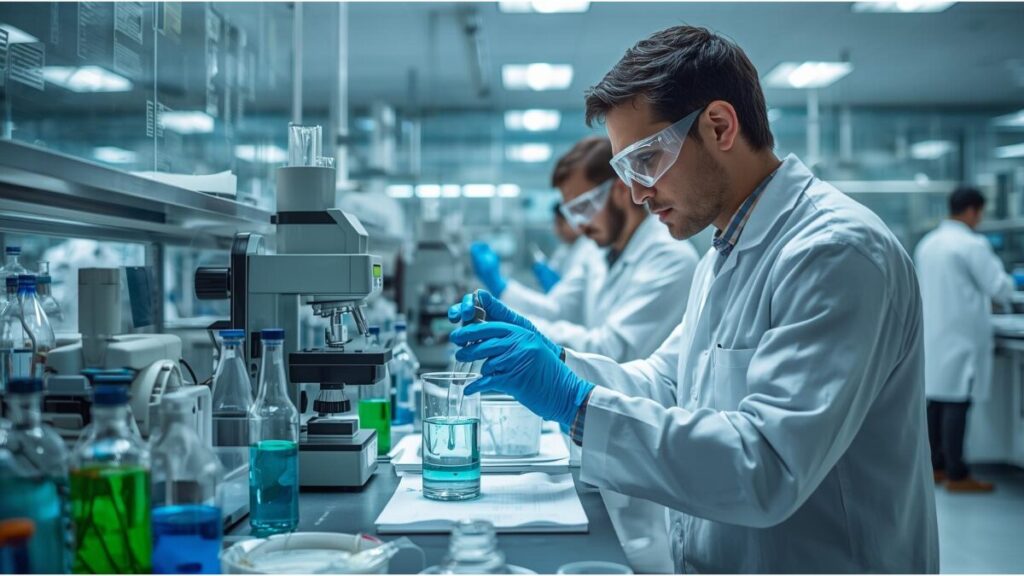
When water finally reaches a testing laboratory, its journey undergoes its most rigorous examination. Certified labs apply advanced science to reveal exactly what the water carries.
Sample Collection and Chain of Custody
Accurate results begin before the lab work does. Samples must be collected using correct containers, at appropriate locations, and following precise procedures to avoid contamination. First-draw samples are essential for lead testing because they capture water that has been sitting in pipes. A documented chain of custody then preserves the integrity of each sample from collection to final analysis.
Physical, Chemical, and Microbiological Analysis
Inside the lab, water is examined across three dimensions:
- Physical analysis measures turbidity, color, odor, and total dissolved solids to reveal visible warning signs
- Chemical analysis quantifies contaminants such as lead, copper, nitrates, PFAS, and disinfection byproducts
- Microbiological analysis screens for bacteria, viruses, and parasites, including coliform and E. coli
Advanced Instrumentation
Modern labs use powerful technology to achieve remarkable precision. Instruments like inductively coupled plasma mass spectrometry detect heavy metals at extremely low concentrations, while chromatography separates complex chemical mixtures to identify specific compounds. These tools allow labs to detect contaminants that would be completely invisible through any other means.
Stage Five: From Results to Safe Consumption
The journey does not end when analysis is complete. The final and most important stage is translating results into action that protects your health.
Understanding Your Report
A quality laboratory report does more than list numbers. It explains which contaminants were found, how they compare to legal safety limits, and what the results mean for your household. Clear reporting turns complex data into decisions you can actually make.
Taking Action
If results reveal elevated lead, solutions may include replacing affected fixtures or installing certified filtration. Bacterial contamination may require disinfection and follow-up testing to confirm the issue is resolved. Even clean results carry value by establishing a baseline and confirming that current safeguards are working. Retesting after plumbing changes or renovations keeps water safe over the long term, completing the cycle from source to safe consumption.
Why This Journey Demands Testing
Following water from its natural origins to your glass reveals a fundamental truth: safety is not guaranteed at any single point. Nature introduces contaminants, treatment reduces them, distribution can reintroduce them, and building plumbing can add new ones. Municipal testing verifies safety only up to the property line. Laboratory testing at your specific tap is the only way to confirm that the entire journey has delivered water that is truly safe to drink. It is the final, decisive checkpoint in a process that touches every glass you pour.
Who Should Prioritize Water Testing?
- Homeowners in older buildings, where lead pipes or solder may remain
- Property managers responsible for the health of multiple tenants
- Households with infants, pregnant residents, or immunocompromised members
- Buyers and sellers during real estate transactions
- Anyone noticing changes in taste, odor, color, or staining around fixtures
Because many contaminants produce no immediate symptoms, waiting for an obvious problem often means waiting too long. Periodic testing offers early detection and lasting peace of mind.
Frequently Asked Questions
If municipal water is treated, why do I still need testing?
Treatment and municipal testing generally end at the property line. Your building’s pipes, fixtures, and tanks can reintroduce contaminants like lead after the water leaves the plant, so point-of-use testing is the only way to confirm safety at your actual tap.
What does a water testing lab actually check for?
A certified lab examines physical properties like clarity and dissolved solids, chemical contaminants such as lead, nitrates, and PFAS, and microbiological threats including bacteria and parasites. Together, these analyses build a complete safety profile of your water.
How often should I have my water tested?
Most experts recommend testing at least once a year, and more frequently if you live in an older building, have vulnerable household members, or notice changes in taste, smell, or appearance. Testing is also advisable after major plumbing work.
Can a home test kit replace laboratory analysis?
Home kits provide only a rough snapshot and lack the sensitivity, accuracy, and certified backing of laboratory analysis. For results you can act on with confidence, especially regarding lead, PFAS, and bacteria, professional lab testing is far more reliable.
How long does laboratory testing take?
Turnaround depends on the contaminants being analyzed. Some microbiological results are available quickly, while comprehensive chemical panels may take several days to complete through a certified laboratory.
Complete Your Water’s Journey With Trusted Testing
From natural sources to municipal treatment, through miles of pipe and into your building, water travels a long and complex path before it reaches your glass. Only certified laboratory testing can confirm that this journey ends in water that is genuinely safe to drink. It is the final checkpoint that transforms uncertainty into confidence. Contact Olympian Water Testing today to schedule your assessment and complete your water’s journey to safe, healthy consumption.